The Walled City
Every client environment is a fully isolated, independently deployable fortress — built on enterprise-grade infrastructure with Zero Trust security, automated provisioning, and continuous deployment.
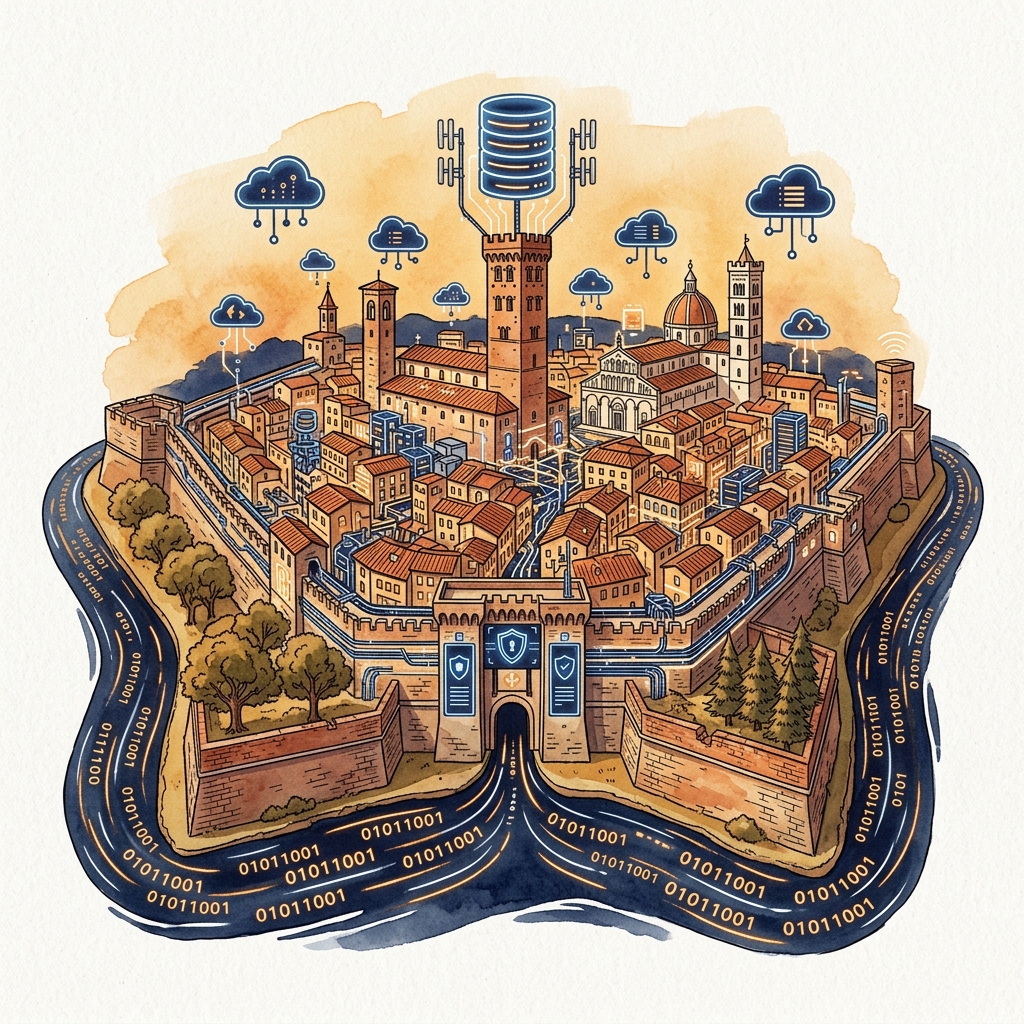
Why We Named It Lucca
Lucca is a Renaissance city in Tuscany, famous for its perfectly preserved walls. For centuries, those walls defined the boundary between the thriving, cultivated interior and the unpredictable world outside. Controlled gates regulated who entered and exited. The city flourished — not in spite of its walls, but because of them.
This isn't multi-tenancy behind a shared wall. Each environment is its own independent deployment — its own repository, its own CI/CD pipeline, its own database, its own access policies. If one city falls, the others stand. That's the architecture.
The Three-Layer Stack
The platform is composed of three named layers — each with a distinct responsibility, each independently scalable, all orchestrated from the control plane.
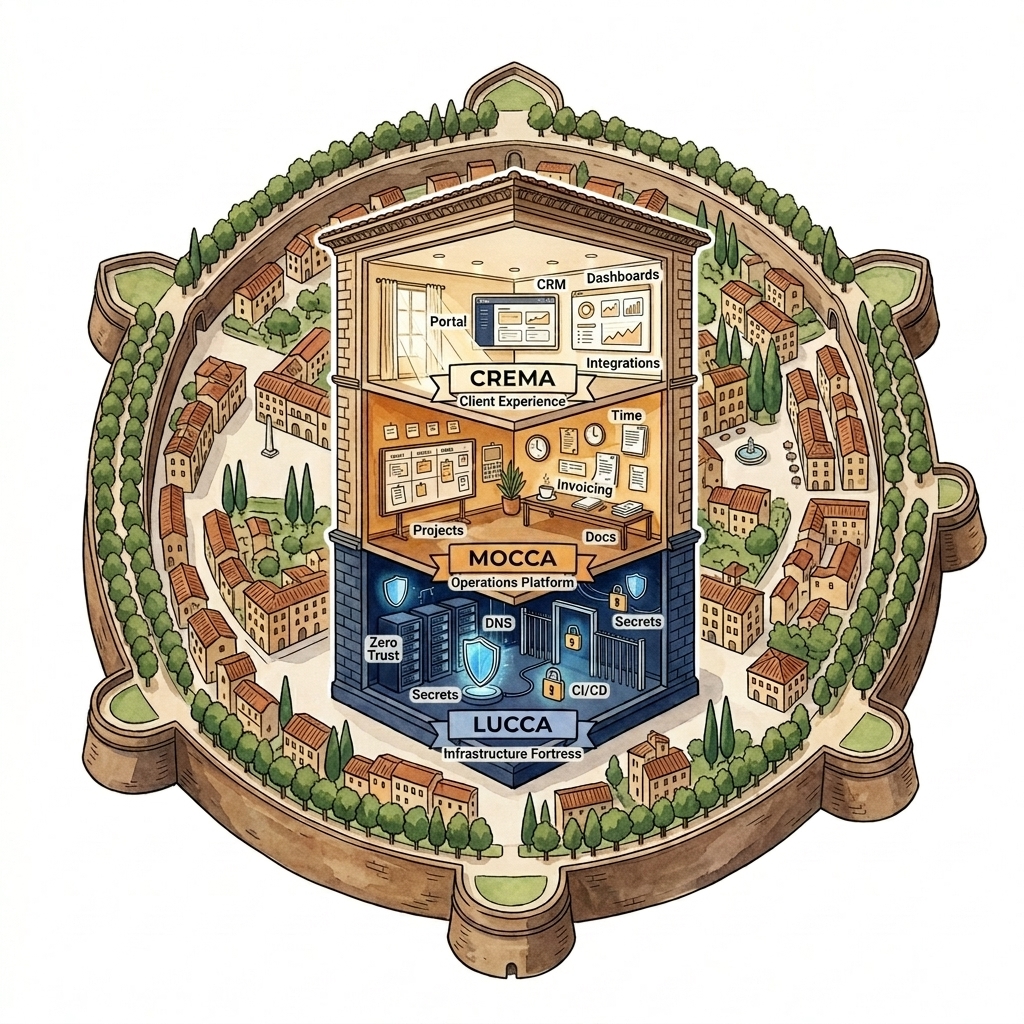
Infrastructure Layers
- Deployment Platform — Cloudflare Pages (with support for Vercel, AWS Amplify). Each project has its own Pages instance with automatic builds.
- Git Repository — Private GitHub repository per project, generated from production-grade templates. Configurable organisation, template repo, production branch, staging branch.
- Domains & DNS — Custom production and staging domains (e.g.
crm.clientname.nz,crm-test.clientname.nz). Cloudflare zone management with automatic CNAME provisioning. Support for externally-managed DNS zones. - Zero Trust / Access — Cloudflare Access policies per application. JWT-validated access with team domain + Application AUD tags. Separate AUD tags for CRM and API applications. No VPNs, no open ports, no exposed attack surface.
- Database & Storage — Neon Serverless PostgreSQL per environment (with Supabase, PlanetScale support planned). Configurable PG version (15/16/17). Schema migrations directory configurable per project. Optional R2 object storage bucket for file uploads.
- Actions Secrets — Automated injection of secrets into GitHub repositories:
CLOUDFLARE_API_TOKEN,CLOUDFLARE_ACCOUNT_ID,NEON_API_KEY,MOCCA_WEBHOOK_SECRET(auto-generated per project). Secrets are injected at provisioning time and can be rotated.
- Multi-client, multi-project management from a single interface
- Client and project CRM with milestones and tasks
- Time tracking integrated with Xero invoicing
- Document lifecycle — proposals, SOWs, contracts
- Support ticketing and real-time chat
- Infrastructure monitoring — deploy status, pipeline health, provisioned timestamps
- Client portal management — provision and configure portals per client
- Branded client portals — each client gets their own portal domain and identity
- Custom CRM applications built per client workflow
- Data dashboards from integrated sources
- Document sharing and approval workflows
Git → Deploy — The Full Pipeline
Every project follows the same deterministic path from template to production. No manual steps, no ad-hoc configuration, no snowflake environments.
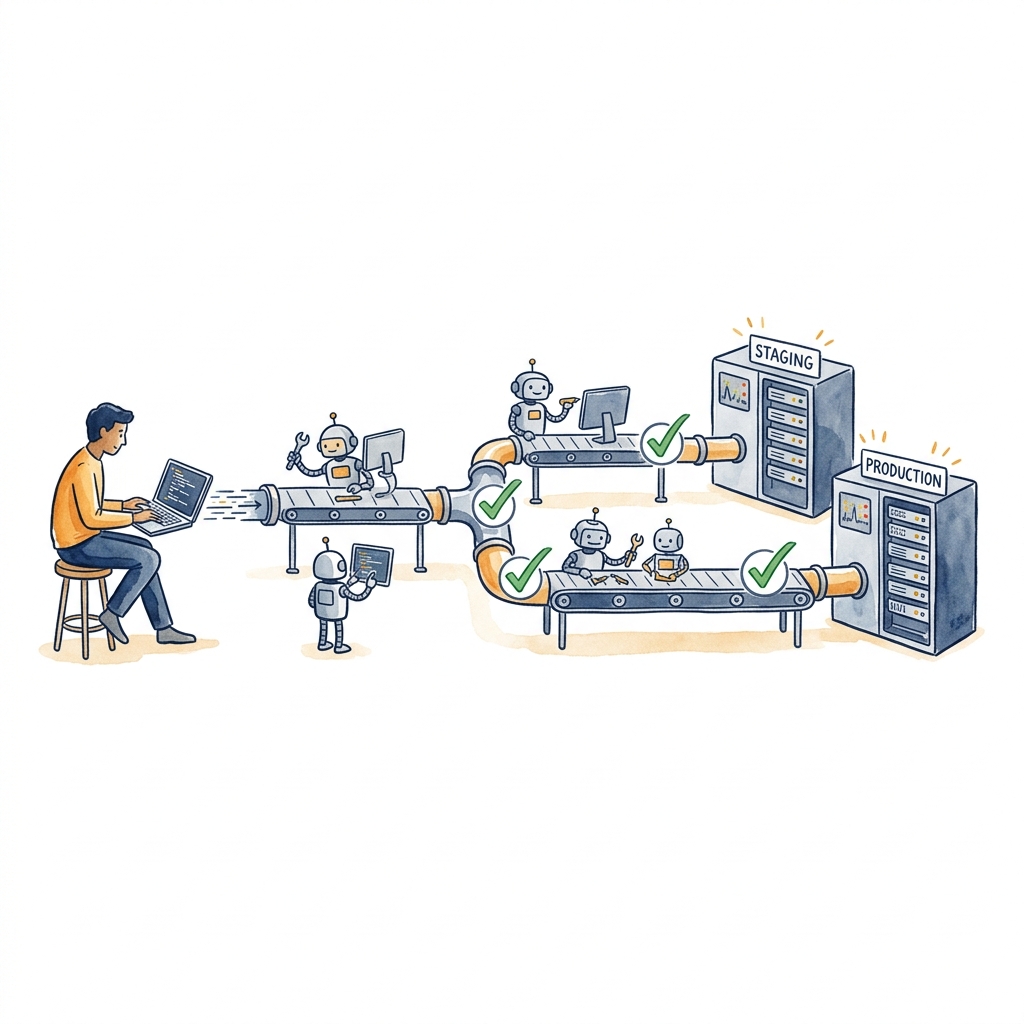
Template Cloning
New projects are created from battle-tested template repositories containing the full stack: frontend, API, database schema, CI/CD pipeline, infrastructure-as-code.
Automated Provisioning
One button creates: private repo, configures Actions secrets, sets up Pages project, provisions DNS, creates Zero Trust policies.
Branch Strategy
staging branch triggers test environment deploys. main branch triggers production deploys. Feature branches for development.
CI/CD Pipeline
GitHub Actions runs on every push: lint, type-check, build, deploy to Cloudflare Pages. Fully automated, zero manual intervention.
Webhook Integration
On deployment completion, Cloudflare/GitHub sends a webhook to Mocca, updating deploy status, timestamp, and stage in real-time.
Zero-Downtime Deploys
Cloudflare Pages uses atomic deployments. The old version serves traffic until the new build is fully uploaded, then switches instantly.
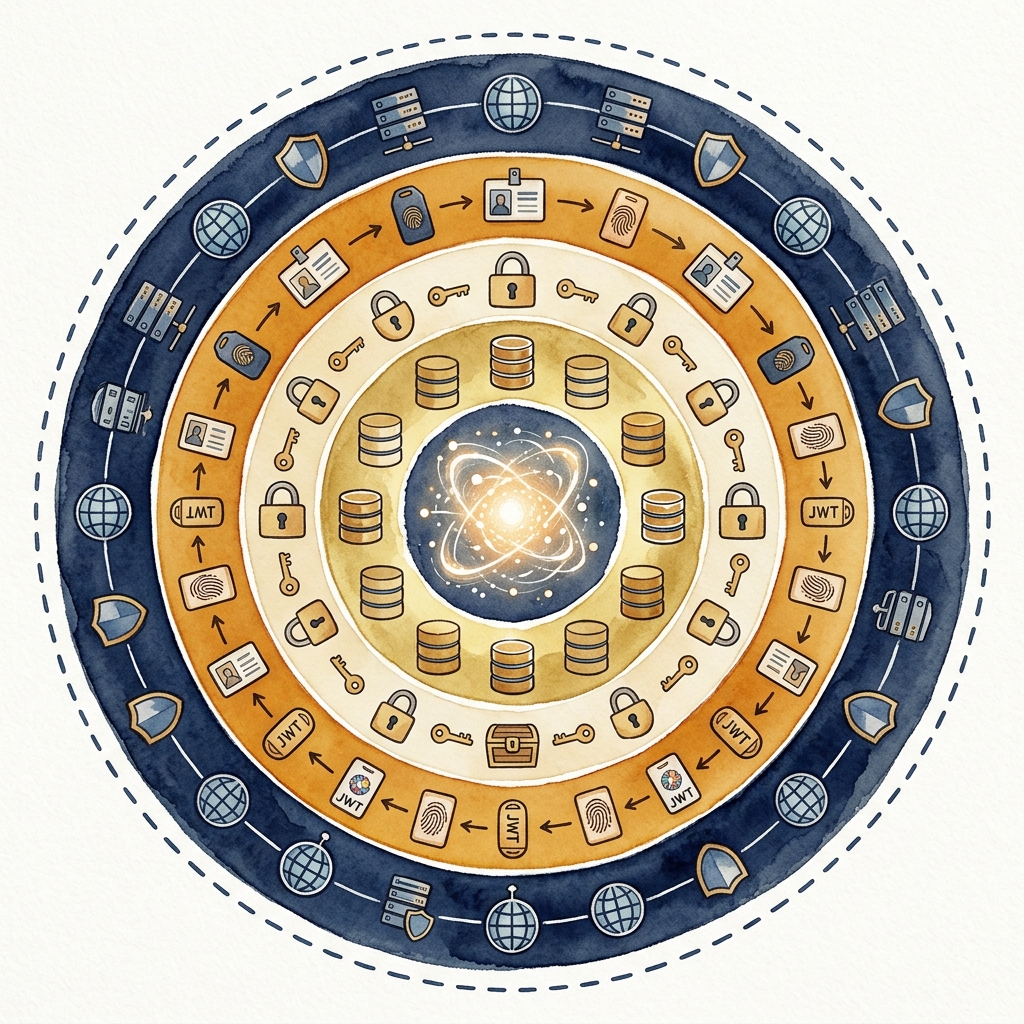
Security Architecture
Security isn't a feature — it's the foundation. Every layer of the stack enforces isolation, encryption, and least-privilege access by default.
🔒 Network Isolation
Each client runs on their own Cloudflare Pages project. No shared compute, no shared database, no co-tenancy.
🛡️ Zero Trust Access
Every request authenticated via Cloudflare Access JWT. Team domain + AUD tag validation. No VPN required.
🔐 Encrypted Secrets
API tokens, database credentials, and webhook secrets are injected as sealed GitHub secrets. Never stored in code or logs.
🌐 Edge Security
All traffic routes through Cloudflare's global network. DDoS protection, WAF, bot management, and SSL termination at the edge.
🗄️ Database Isolation
Each client has their own Neon PostgreSQL database. Connection strings are per-environment secrets. No shared schemas.
📋 Audit Trail
Every deployment, configuration change, and provisioning event is logged with timestamp and actor.
What Gets Provisioned
One button press triggers the creation of all of the following. Every component is API-driven, repeatable, and auditable.

| Component | What's Created | Lifecycle |
|---|---|---|
| GitHub Repository | Private repo from template | Per-project, permanent |
| CI/CD Pipeline | GitHub Actions workflow | Automatic on push |
| Cloudflare Pages | Pages project + custom domains | Per-environment |
| DNS Records | CNAME records for prod + staging | Auto-provisioned |
| Zero Trust Policies | CF Access application + policies | Per-application |
| Database | Neon PostgreSQL instance | Per-environment |
| Object Storage | R2 bucket (optional) | Per-project |
| Secrets | 4 GitHub Actions secrets | Injected at provision |
Infrastructure as Code
Every configuration value is stored in the project record inside Mocca. The Lucca Configuration panel lets operators define the entire infrastructure shape — and those values generate the actual infrastructure at provision time.
When an operator clicks "Provision", the Lucca engine reads these values and calls the appropriate APIs — GitHub, Cloudflare, Neon — to create the full environment. Every value is auditable, every change is tracked.
Multi-Environment Architecture
Every project operates across two deployment environments, both managed and monitored through Mocca. Same codebase, separate infrastructure, independent lifecycles.
🟡 Test / Staging
- Deploys on
stagingbranch push - Uses test domains (e.g.
crm-test.clientname.nz) - Connects to staging database
- Protected by Zero Trust policies
- Used for client review & QA
🟢 Production
- Deploys on
mainbranch merge - Uses production domains (e.g.
crm.clientname.nz) - Connects to production database
- Protected by Zero Trust policies
- Atomic zero-downtime deploys
Enterprise Infrastructure. Startup Speed.
Every environment is provisioned in minutes, secured by default, and monitored continuously. The same architecture that protects financial institutions — available to every client, at every scale.